



Vuboi
A community-driven wellness product — designed and built by one designer who refuses to stop at the handoff.
A wellness product I'm designing — and bringing to life myself.
I'm a product designer. But I don't stop at the handoff.
Most designs die in a Figma file, waiting for an engineering team that's always busy. Mine don't. I use AI-assisted building — "vibecoding" — to take my own designs off the canvas and turn them into something real you can actually click. I'm not an engineer and I don't pretend to be. I'm a designer who refuses to let the work end at a screenshot.
Vuboi is where I'm proving that. It's a community-driven wellness product I'm designing end to end — the vision, the flows, the interface, the words — and shipping the first pieces of, on my own.
The part most designers never get to do
There's a quiet trap in product design, and I decided early not to fall into it. A designer can have the sharpest ideas in the room and still spend an entire career one step removed from the real thing — drawing a screen, handing it off, and hoping it survives translation. Often it doesn't.
I didn't want that distance. So instead of designing Vuboi and waiting, I'm building it — directing AI tools to assemble what I design, learning the product by living inside it rather than describing it from the outside.
That changes how I design. Because I know I'll be the one putting a screen together, I stop drawing pretty dead-ends and start designing things that actually work: real states, real edge cases, real content. My design gets honest, because it has to become real.
What's live today
I'm honest about where the product is, because that honesty is part of the craft.
Vuboi isn't finished, and it isn't pretending to be. What's real and shipped right now are the pieces that matter most for a first impression and a first session:
The marketing page — the front door. The job here is positioning and trust: making a stranger understand, in seconds, what Vuboi is and why it's for them. This is brand, message, and interface working as one, and it's the surface where I get to set the entire tone of the product.
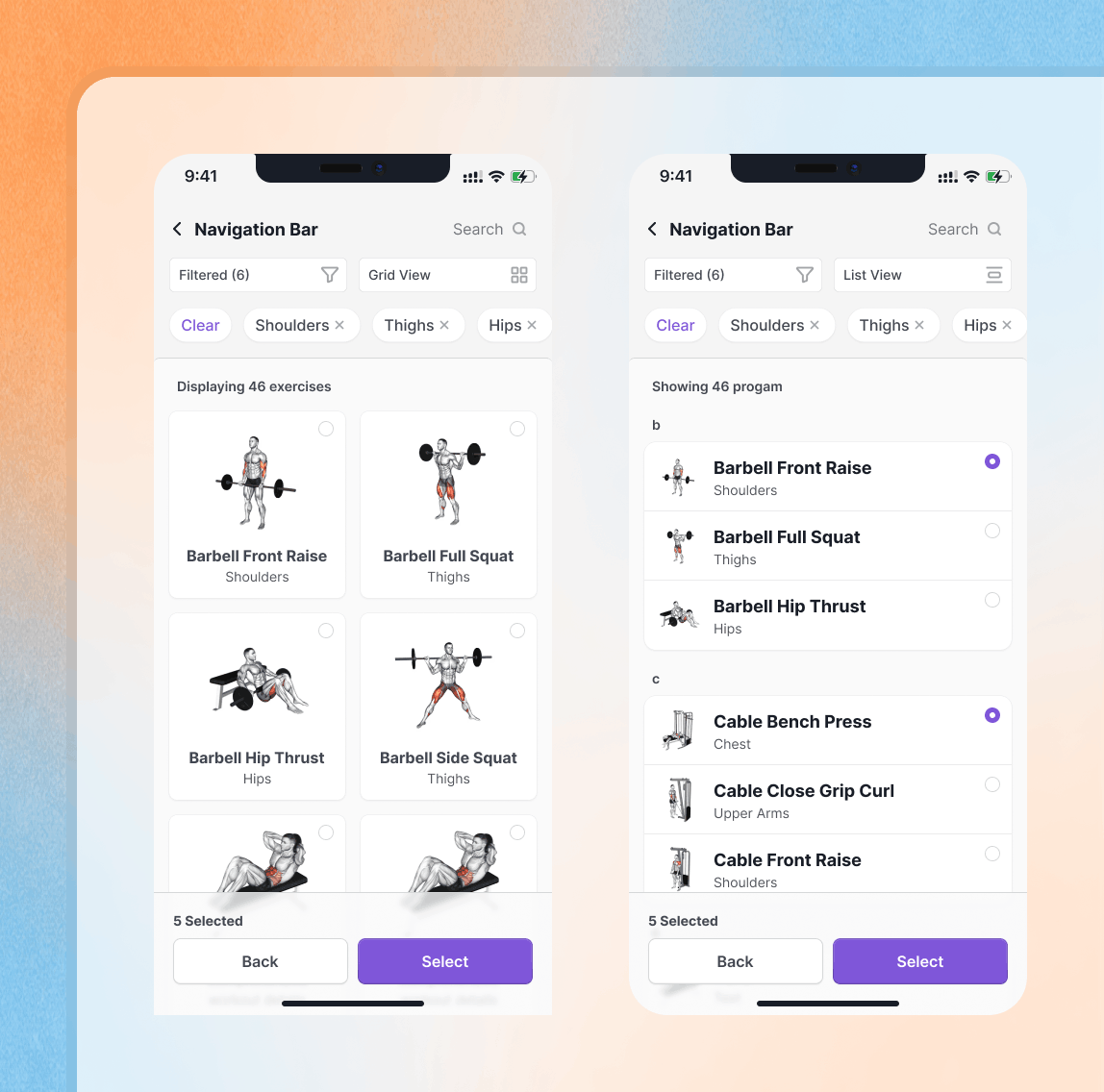
The workout planner (draft). The first real workflow: building and shaping a workout. This is where I'm designing the actual language of the product — how a plan is structured, how it feels to assemble one, how much complexity to show and how much to hide.
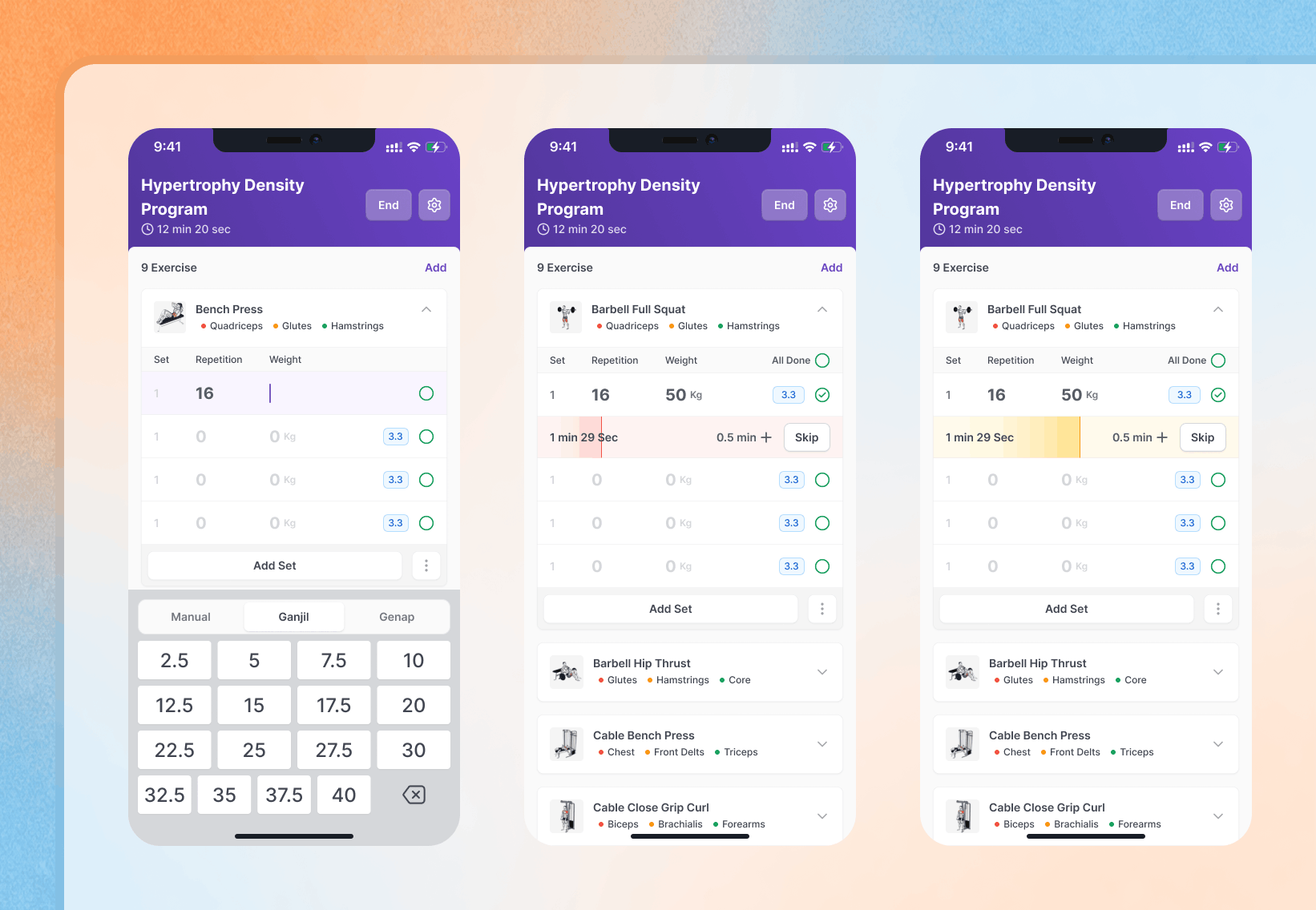
The workout tracker. The moment of truth in any fitness product — logging what you actually did. This is the screen a user touches mid-set, sweating, distracted. Designing it means designing for the worst conditions, not the best: big targets, no friction, instant feedback.
These three are deliberately the right first steps: the page that earns attention, the flow that creates a plan, and the screen that captures the effort. Everything else is designed and waiting behind them.
The product I'm designing toward
The three live pieces sit on top of a much larger product I've already mapped out in detail — and the depth of that map is the real evidence of how I think.
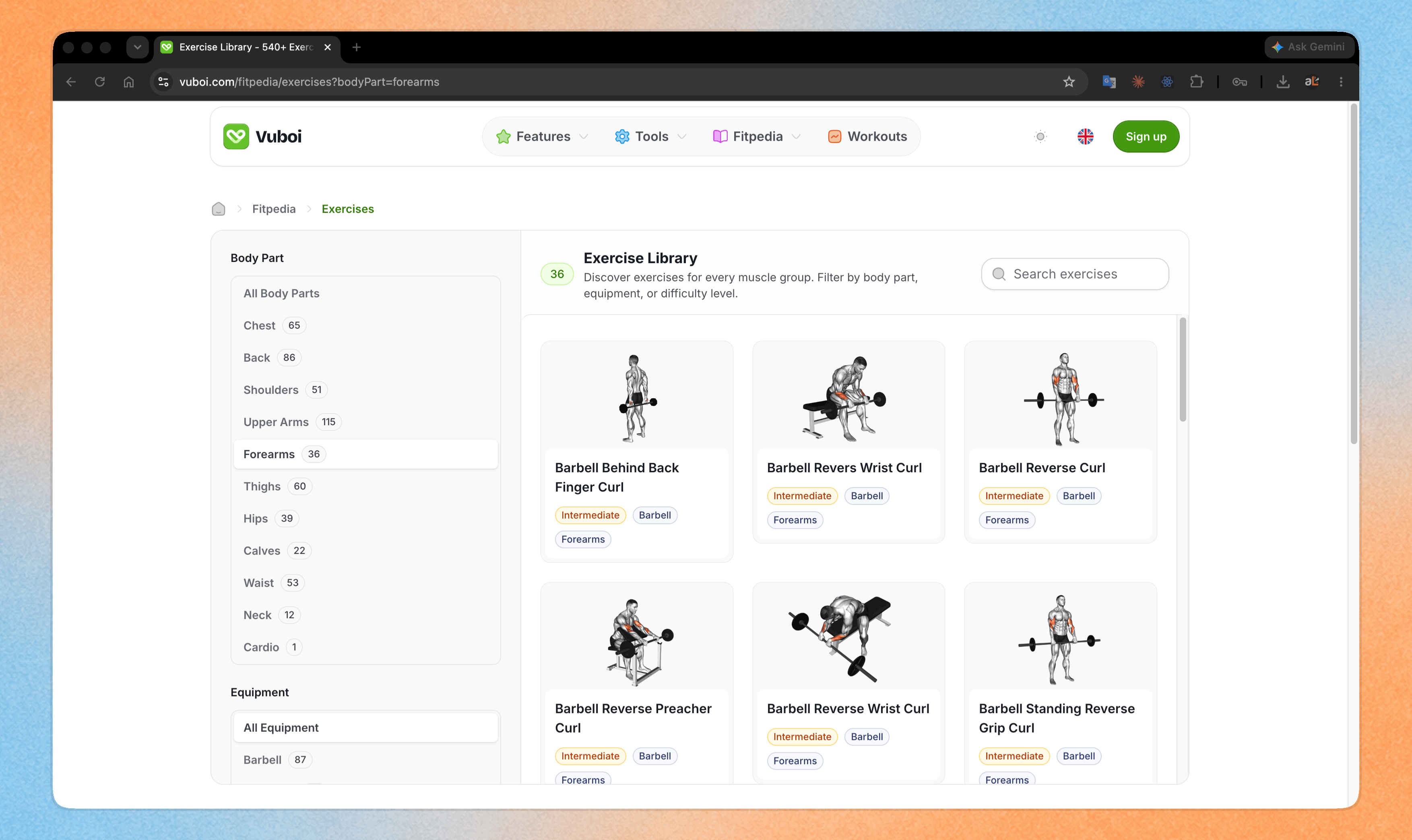
I've designed Vuboi around a structured library of 540 exercises, each one organized the way a coach actually thinks — by equipment, body part, difficulty, and whether it's measured in reps, time, or distance, with demonstrations for every movement. On top of that sits a vocabulary of real training: supersets, circuits, rounds, rest, tempo, training phases, multi-week programs with concepts like a deload week built in.
Around the workout sits the part that actually keeps people going: a community layer — sharing plans, following a coach, encouraging each other — and progress tracking that records not just what you lifted but how you felt before and after, because mood is the part that decides whether you come back.
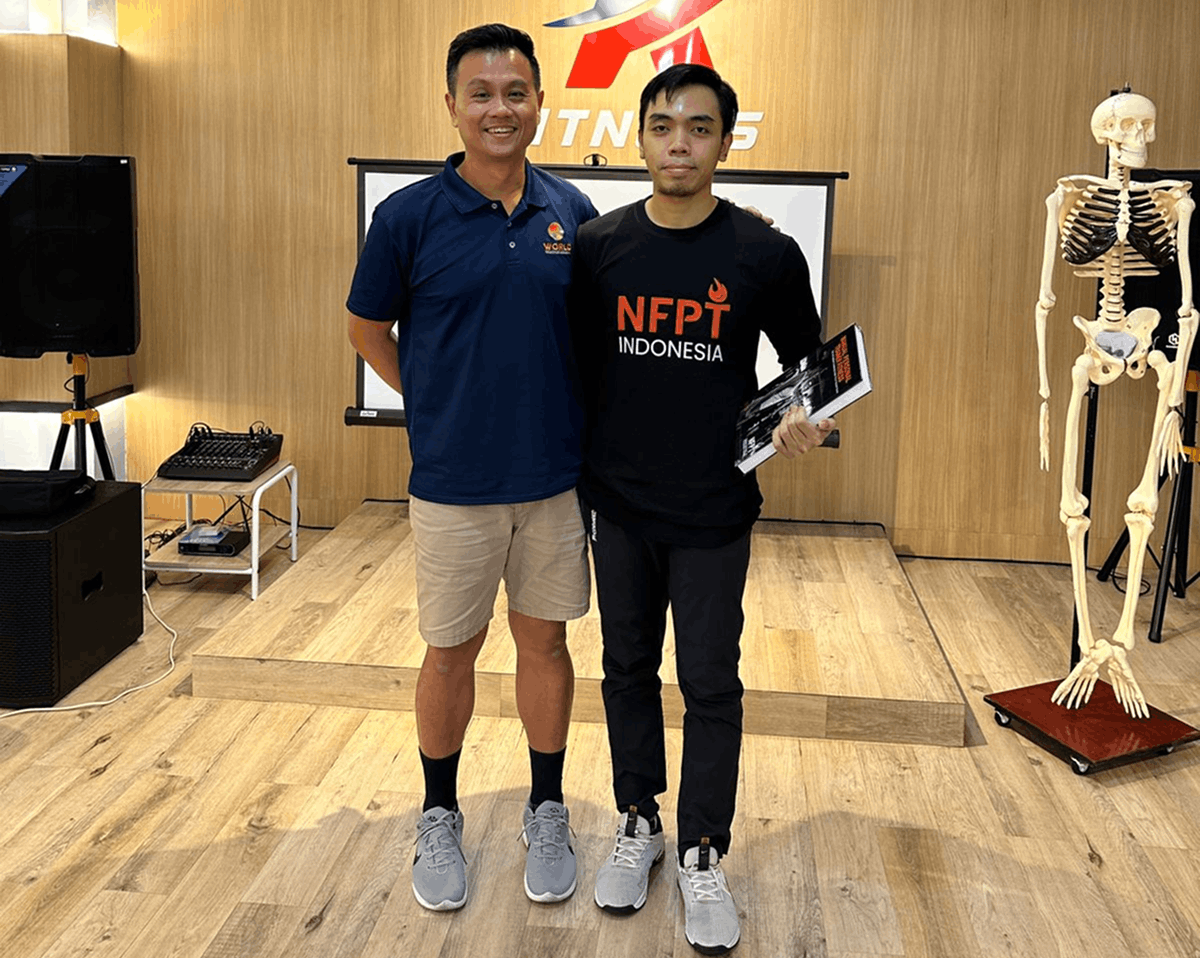
The training logic isn't guesswork. I'm earning my personal-training certification through NFPT (the National Federation of Professional Trainers) — an NCCA-accredited program that's been training professionals since 1988. When Vuboi distinguishes a primary mover from a secondary one, or builds a deload week into a program, that's not a designer copying competitors. It's a designer who is also studying to coach real people, designing from the inside of the domain.
How I work, in three short stories
I design what I can make real. Rather than hand a perfect file to no one, I design and then build it myself with AI tools. It keeps me honest — a flow I can't bring to life is a flow I haven't finished thinking through.
I design for the loneliness, not the workout. The hardest problem in fitness isn't the exercise — it's that people quit because they're doing it alone. So the heart of what I'm designing is the connective tissue: sharing, following, encouraging. Making "wellness is shared" feel true, not just sound true on the marketing page.
I know what to ship first. Faced with a huge product, the temptation is to build everything halfway. I chose the three pieces that form one honest first impression — earn attention, make a plan, track the effort — and got those real before chasing the rest. Knowing the order is a design decision too.
What it's really about
Vuboi's line is "Every Step Shapes You." Wellness isn't a heroic transformation — it's small, consistent, shared actions that compound. A workout. A meal. A note of encouragement from someone on the same path. People keep going not for an abstraction like "health," but for each other.
That belief is why I'm designing a community into the product instead of just a logger, why the tracker asks how you feel and not only what you lifted, why the front door is warm instead of clinical. I'm not designing features. I'm designing a shorter distance between a person and their next good decision.
Vuboi — Every Step Shapes You. Designed and brought to life by Salman.